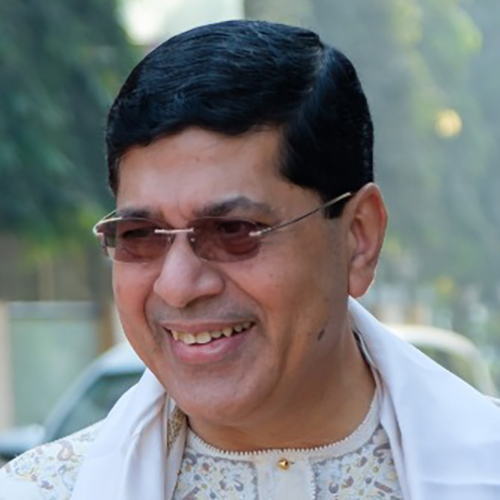
In this discussion at Pandit Sanjay Rath’s home, the focus is on clarifying Graha Mālikā Yoga amid widespread confusion and mislabeling. Paramguruji explains “mālikā” through the metaphor of a garland: planets strung in a single continuous sequence across signs, where the first task is to identify the dominant planet (like the main gemstone in a necklace), because that dominance determines both interpretation and remedial emphasis.
He stresses key rules from the tradition (attributed to Rāmānujācārya and the Bhāvārtha Ratnākara): a true graha-mālikā requires at least five consecutive signs (not fewer), can extend up to nine, and may include Rāhu–Ketu—contrary to claims that nodes “don’t count.” The yoga’s “starting point” becomes a functional secondary lagna (the yoga’s Brahma-sthāna), which can “switch on” rajayoga-like momentum when properly recognized, while the ending sign/house (the ‘Shiva’ end) is presented as even more decisive for the final outcome—honor vs disgrace, liberation vs entanglement—illustrated through political and life examples.
A major portion of this talk is devoted to differentiating Kāla Yoga, Kāla Sarpa, and Kāla Amṛta, arguing that many charts called “kāla sarpa” are actually mālikā-type formations or “kāla” experiences without the serpent becoming dominant; the correct diagnosis depends on planetary strength, navāṁśa/ārūḍha considerations, and which planet truly controls the pattern. The session closes with practical guidance: avoid moralistic labeling, study the chart carefully, and base remedies on the dominant graha (including appropriate Mahāvidyā approaches where relevant), with a brief aside contrasting mālikā with other formations such as “gadhā” yogas.
[00:00] Introduction – Nikhil Khanna with Pandit Sanjay Rath [00:37] Opening – Om Gurave Namaḥ [00:50] What is graha mālikā yoga? [01:05] Mālikā means garland – the dominant bead [03:12] Finding the dominant planet in the mālikā [03:48] Rāmānujācārya’s definition in the Bhāvārtha Ratnākara [04:28] Minimum of five signs – the 5th house and mantra [05:38] Planets in four signs from lagna form gadā yoga, not mālikā [06:01] Where the mālikā begins is its lagna – the brahma sthāna [07:48] The ending matters most – Naveen Patnaik and Arvind Kejriwal [10:38] The end of the yoga is Śiva [11:33] A mālikā ending in the 8th house – secret charity [13:29] Results of five-, six- and seven-planet mālikās [13:59] An eight-planet mālikā includes Rāhu and Ketu [15:17] Following the guru’s word – reading before sleep [16:59] Dominant planet as Brahmā or Śiva, Viṣṇu in between [17:22] Five types – five to nine planets [17:47] Importance of the starting house [20:23] Daily mālikā and the order of Vimśottarī daśā [21:07] Kāla sarpa yoga or graha mālikā? [21:20] Visti’s chart – kāla amṛta or mālikā [22:01] A yoga is named by where it ends – Ketu and amṛta [23:15] Garuḍa website and life in Puri [26:11] Why Visti’s chart is a graha mālikā [27:04] Brāhmaṇa by karma, not by birth – Śiva Purāṇa [28:39] Meaning of kāla amṛta and kāla sarpa [30:29] Don’t call every kāla yoga a kāla sarpa [31:22] Navāṃśa and ārūḍha decide kāla sarpa or kāla amṛta [32:09] Rāhu must be strongest for kāla sarpa [33:10] Dominant planet in a kāla yoga – coal to diamond [34:23] Rāhu or Ketu in the place of Śiva [35:22] Remedy – the Mahāvidyā of the dominant planet [36:10] Mātaṅgī Mahāvidyā for Visti – strengthening the Sun [38:15] Gadā yoga [39:38] Sanjay Rath’s chart – Ketu to Jupiter and Rāhu to Mars [40:09] Jupiter and Saturn at the same degree – Brahmaloka [41:05] The planet with Jupiter shows the deity